


 Cart
Cart
 sales@molnova.com



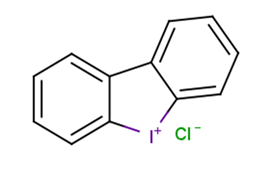
Diphenyleneiodonium chloride
CAS No. 4673-26-1
Diphenyleneiodonium chloride( DPI )
Catalog No. M20682 CAS No. 4673-26-1
Diphenyleneiodonium chloride(DPI) is an irreversible inhibitor of iNOS and eNOS (IC50 values of 50 nM and 0.3 μM respectively)and displays broad-spectrum bactericidal activity.
Purity : >98% (HPLC)
 COA
Datasheet
HNMR
HPLC
MSDS
Handing Instructions
COA
Datasheet
HNMR
HPLC
MSDS
Handing Instructions
| Size | Price / USD | Stock | Quantity |
| 5MG | 34 | In Stock |


|
| 10MG | 55 | In Stock |
|
| 25MG | 98 | In Stock |
|
| 50MG | 178 | In Stock |
|
| 100MG | 309 | In Stock |
|
| 200MG | Get Quote | In Stock |
|
| 500MG | Get Quote | In Stock |
|
| 1G | Get Quote | In Stock |
|
Biological Information
-
Product NameDiphenyleneiodonium chloride
-
NoteResearch use only, not for human use.
-
Brief DescriptionDiphenyleneiodonium chloride(DPI) is an irreversible inhibitor of iNOS and eNOS (IC50 values of 50 nM and 0.3 μM respectively)and displays broad-spectrum bactericidal activity.
-
DescriptionDiphenyleneiodonium chloride(DPI) is an irreversible inhibitor of iNOS and eNOS (IC50 values of 50 nM and 0.3 μM respectively)and displays broad-spectrum bactericidal activity.(In Vitro):Diphenyleneiodonium chloride is a NADPH oxidase (NOX) inhibitor and also functions as a TRPA1 activator with an EC50 of 1 to 3 μM. Application of Diphenyleneiodonium chloride to HEK-TRPA1 cells at a concentration ranges of 0.03 to 10 μM effectively induces a Ca2+ response. However, Diphenyleneiodonium chloride fails to evoke a Ca2+ response in control HEK cells, even at a relatively high dose of 10 μM. When Diphenyleneiodonium chloride is included in the co-cultures, lipopolysaccharide (LPS)-induced preOL apoptosis is significantly inhibited. Treatment with Diphenyleneiodonium chloride is found to significantly attenuate the LPS-induced O2- production by 2.0-fold, reducing it to within 27% of the controls. (In Vivo):Intraplantar injection of 2 mM Diphenyleneiodonium chloride to the hindpaw causes licking or biting behavior. Diphenyleneiodonium chloride treatment immediately or 24 h after lipopolysaccharide (LPS) injection significantly attenuates the LPS-induced loss of O4 positive cells. Treatment with Diphenyleneiodonium chloride either immediately or 24 h after LPS injection significantly ameliorates the LPS-induced disorganization of the white matter nerve fibers. However, treatment with DPI 48 h after LPS injection does not appear to correct the LPS-induced white matter damage. DPI treatment either immediately or 24 h after LPS injection significantly reduces the accumulation of both gp91phox and p67phox in the membrane fraction.
-
In Vitro——
-
In Vivo——
-
SynonymsDPI
-
PathwayImmunology/Inflammation
-
TargetNOS
-
RecptorNOS
-
Research Area——
-
Indication——
Chemical Information
-
CAS Number4673-26-1
-
Formula Weight314.55
-
Molecular FormulaC12H8ClI
-
Purity>98% (HPLC)
-
SolubilityDMSO:6 mg/mL (19.07 mM)
-
SMILES[Cl-].[I+]1c2ccccc2-c2ccccc12
-
Chemical NameDibenziodolium chloride
Shipping & Storage Information
-
Storage(-20℃)
-
ShippingWith Ice Pack
-
Stability≥ 2 years
Reference
1.Singh A K Thakare R Karaulia P et al. Biological evaluation of diphenyleneiodonium chloride (DPIC) as a potential drug candidate for treatment of non-tuberculous mycobacterial infections[J]. Journal of Antimicrobial Chemotherapy 2017.
molnova catalog



related products
-
Cindunistat
Cindunistat (free base) is an orally available selective iNOS inhibitor for the study of arthritis.
-
NOC-5
NOC-5 is an NO donor that induces airway relaxation and concentration-dependently triggers 10 μM DAF-2 fluorescence.
-
CAT639
CAT639 is an improved analog of ATV399 that exhibits improved β-cell viability and insulin secretion in the rat insulin-producing INS1E cells and primary rat dispersed islet cells.
